USDA-NIFA Final Project Report

Detecting Subacute Ruminal Acidosis with a Real-Time Deep Learning Algorithm

A precision-livestock platform that reads cattle rumen gas emissions through optical gas imaging — turning thermal video into an early, non-invasive signal of digestive health.
Explore the research → View publications
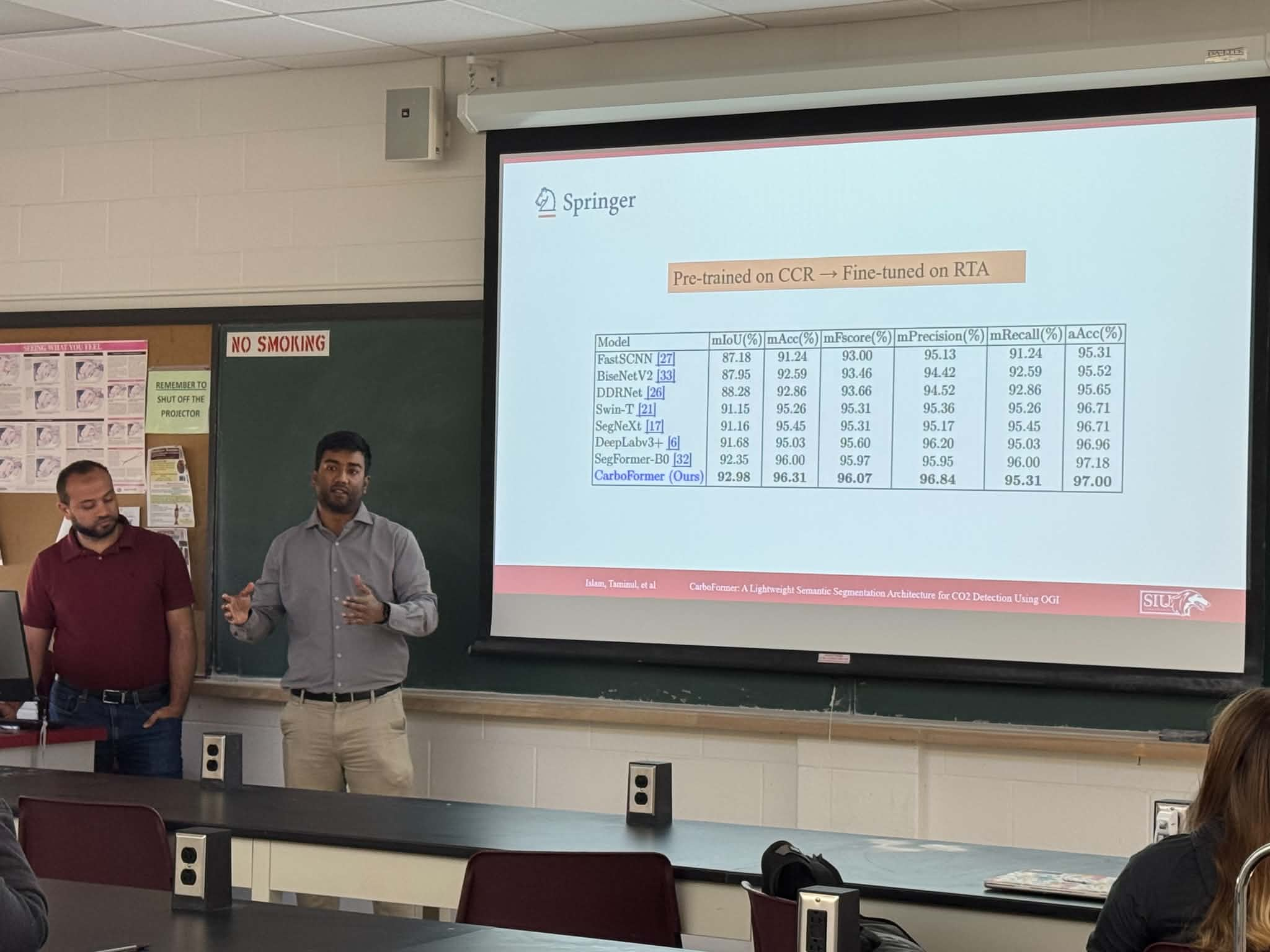
92.98%
mIoU · plume segmentation
3
peer-reviewed papers
2
SIU departments
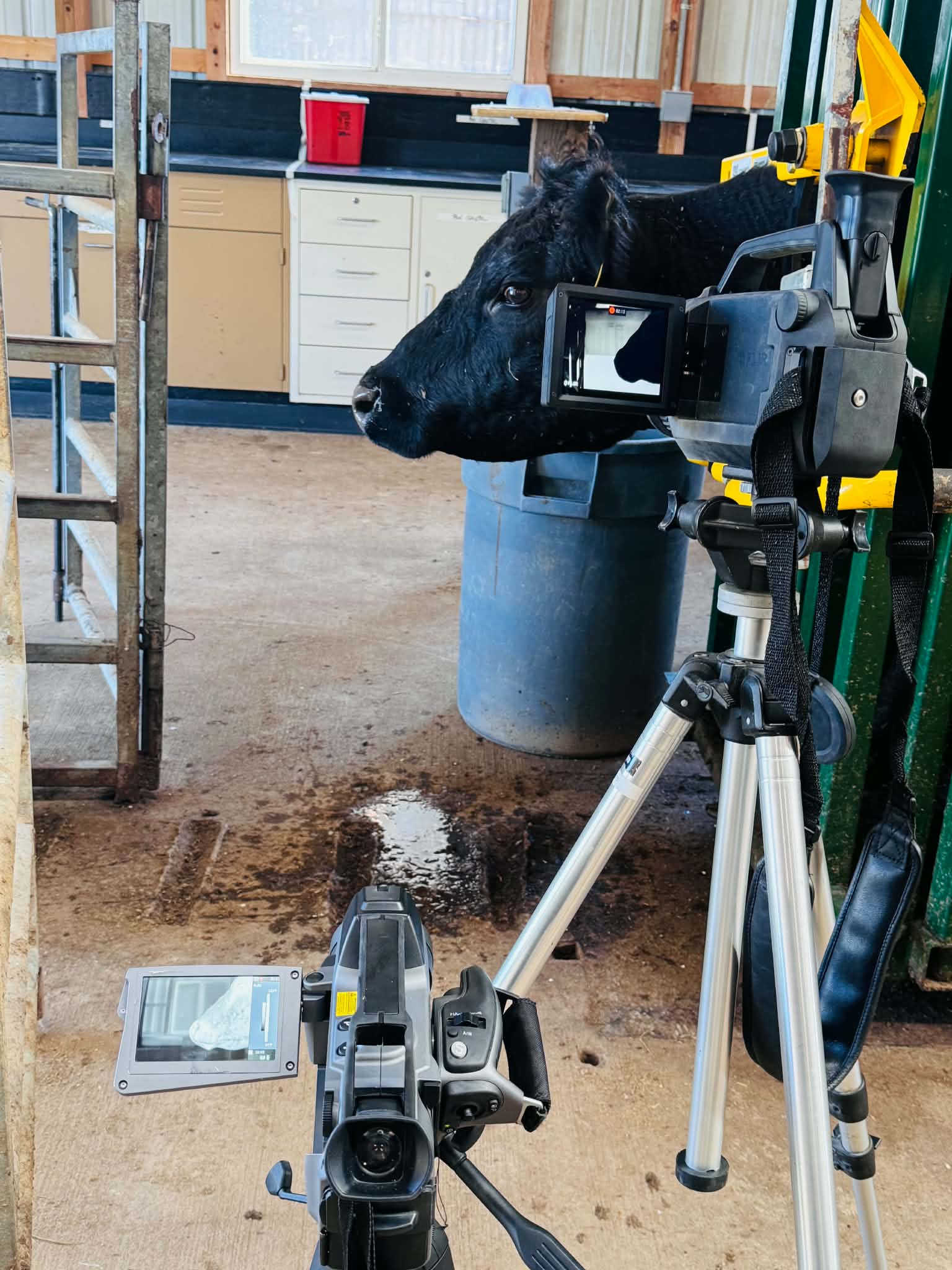
Field OGI data collection with cattle
FIELD CAPTURE · OGI THERMAL CAMERAS · SIU FARM
The Challenge

A costly disorder that hides in plain sight.

Subacute ruminal acidosis (SARA) is one of the most common and economically damaging metabolic disorders in dairy and beef cattle. It depresses feed efficiency, milk yield, and animal welfare — yet it produces few outward clinical signs, making it notoriously difficult to detect on the farm.

Conventional diagnosis relies on invasive rumen pH sampling. Our project asks a different question: what if the rumen's own gas emissions could reveal its health — captured at a distance, in real time, with a camera?

Non-invasive
No probes, no boluses — gas plumes are imaged at a distance with optical gas cameras.
Real-time
Lightweight models run on edge hardware at video frame rates for live monitoring.
The Approach

From a breath of gas to a health signal — in four steps.

01

Capture

Optical gas imaging cameras record thermal video of cattle, visualizing exhaled CO₂ and methane as plumes.

02

Segment

Lightweight neural networks isolate gas plumes from noisy thermal backgrounds, pixel by pixel.

03

Quantify

Plume size, density, and dynamics are measured as proxies for rumen fermentation activity.

04

Classify

Vision-language models flag SARA risk, joining segmentation with health classification.

Key Results

Accurate, lightweight, and fast
enough for the field.

See full benchmarks →
92.98%
mIoU · CO₂ plume segmentation (CarboFormer)
84.68 FPS
Real-time inference on edge hardware
5.07 M params
Compact, deployable model
97.00 %
Overall accuracy on real cattle recordings
Publications

Three papers, one growing system.

All publications →
ISVC 2025 SPRINGER

CarboFormer

A lightweight semantic segmentation architecture for CO₂ detection using optical gas imaging.

Islam · Sarker · Embaby · Ahmed · AbuGhazaleh
WACV 2026 WORKSHOP

FUME

A fused, unified multi-gas emission network jointly segmenting CO₂ and methane from livestock rumen.

HARVEST-Vision · IEEE/CVF
UNDER REVIEW SMART AG. TECH.

VLMDual

A vision-language distillation framework for joint classification and plume segmentation in SARA detection.

Vision-Language · Distillation
Experimental Setup

From controlled chambers to live cattle.
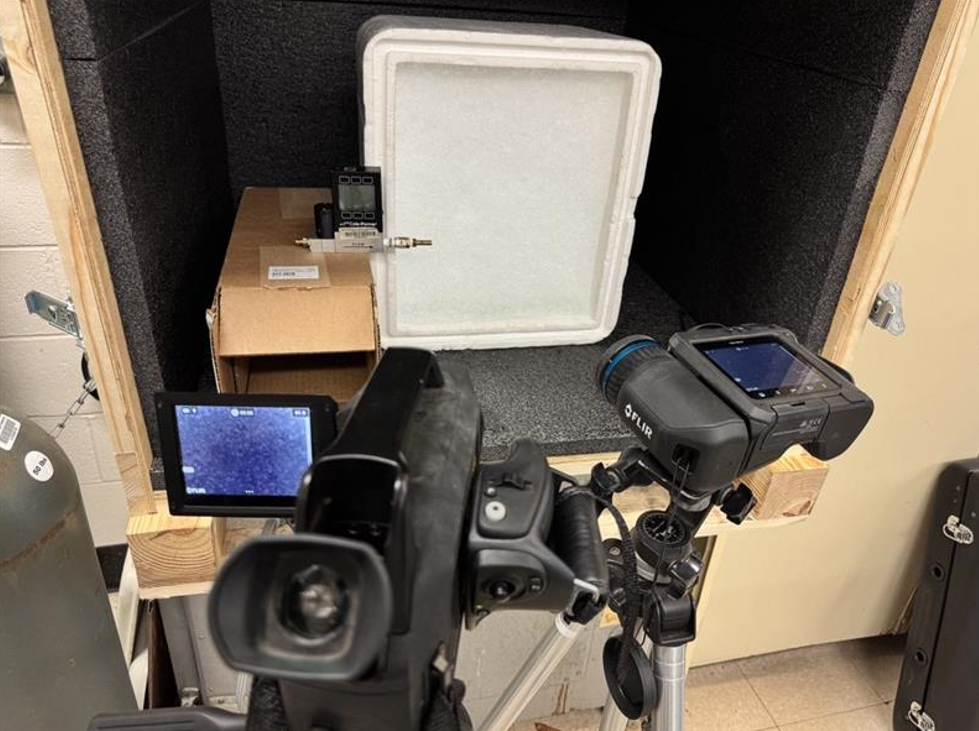
Inside the methodology →
Controlled gas release chamber
CONTROLLED RELEASE

Calibrated gas chamber

FLIR OGI cameras image known CO₂ releases in an insulated chamber, building a clean, labeled training corpus.

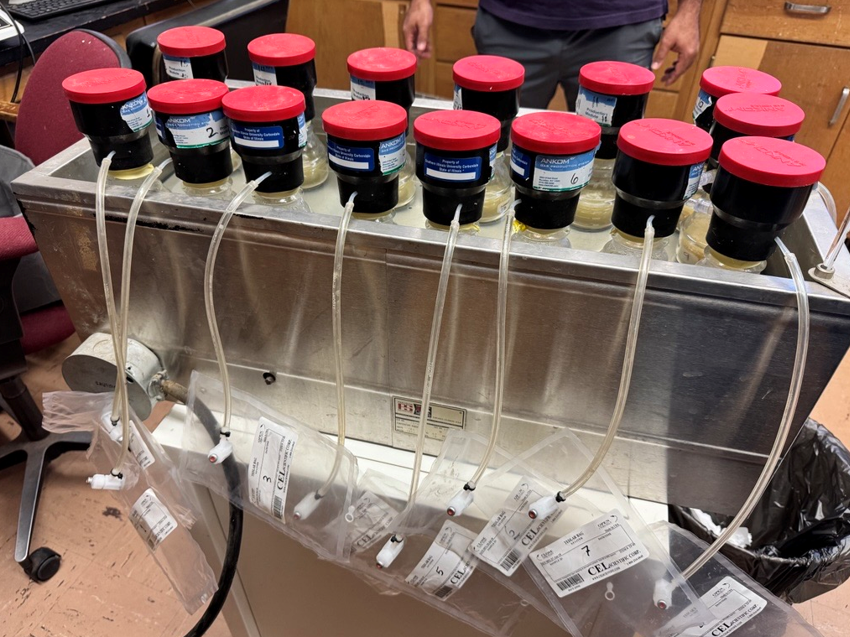
In-vitro rumen fermentation system
IN-VITRO FERMENTATION

Rumen in a bottle

ANKOM gas-production arrays simulate rumen fermentation, linking measured gas output to acidosis conditions.

Field data collection with cattle
FIELD DEPLOYMENT

Live cattle, real barns

Models fine-tuned on recordings of cattle at the SIU farm, validating performance in real conditions.

AI in Animal Science Workshop
Outreach

Artificial Intelligence in Animal Science Workshop

Hosted by the Department of Animal Science at SIU Carbondale on March 18, 2026, the workshop shared this work with students, researchers, and the agricultural community — bridging computer vision and livestock science.

DATE  Mar 18, 2026 HOST  Dept. of Animal Science, SIU
Competitions & Recognition

Sharing the work beyond the lab.

Falling Walls Lab Illinois — 3rd place
3RD PLACE FALLING WALLS LAB ILLINOIS

Breaking the Wall of Invisible Acidosis

WHERE  Springfield, IL DATE  Sep 12, 2025
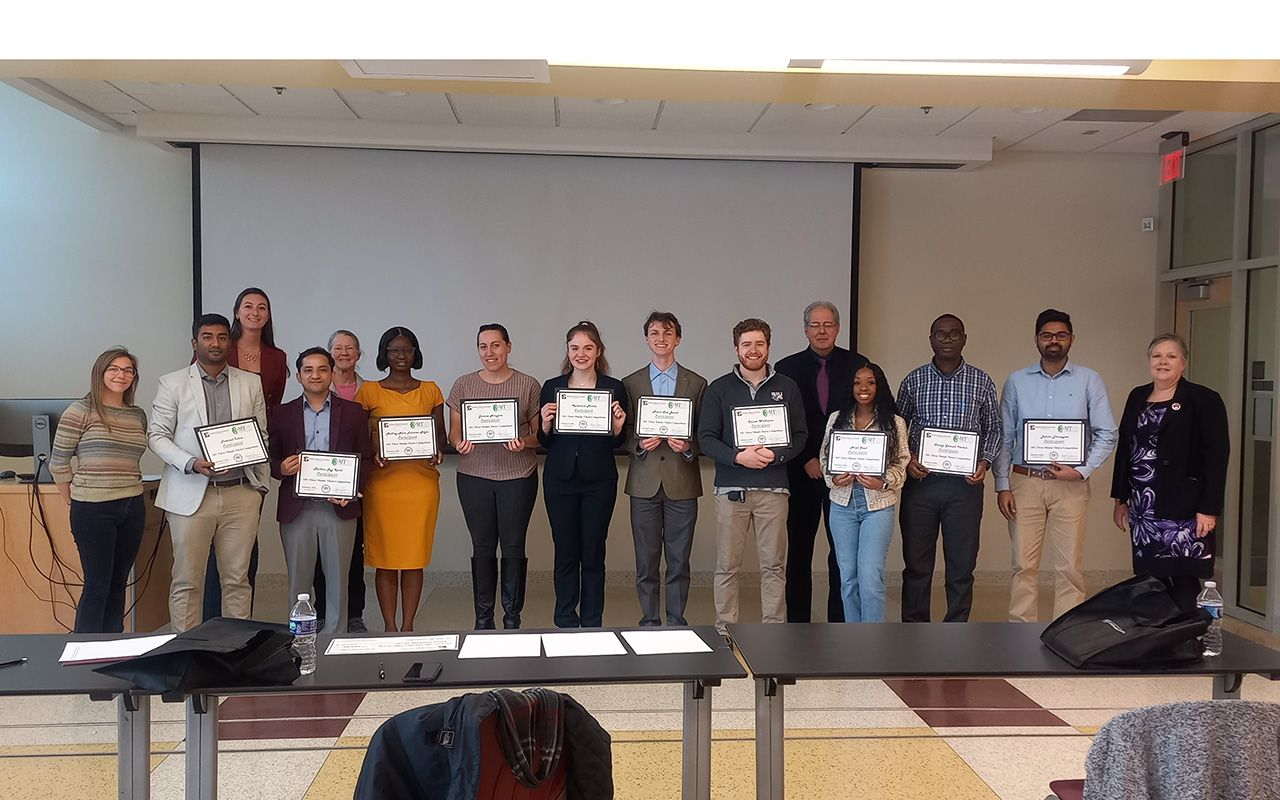
SIU Three-Minute Thesis (3MT) competition
3MT 2026 SIU CARBONDALE

Breaking the Wall of Invisible Acidosis with Artificial Intelligence

WHERE  Carbondale, IL DATE  Feb 6, 2026
Funding & Acknowledgment

This work is supported by the United States Department of Agriculture, National Institute of Food and Agriculture (USDA-NIFA), through the Capacity Building Grants for Non-Land-Grant Colleges of Agriculture.

GRANT NO.2023-70001-40997